Monday, May 14, 2018
not the first - wasn't the last
What needs to be taken into account are the circumstances that accompany the 1992 Los Angeles riots. The brutality and hatred shown towards Rodney King, as captured in video, is not a rarity, but instead a commonality. People reacted severely to the event, but, this was not the first time something like this had happened and it most definitely was not the last. This event is NOT a one time scenario, NOT an uncommon occurrence, NOT a freak accident. Violence against minorities, African American and black people in particular, is (and has been) continuously going on. The uproar that came with the beating of Rodney King only proved to provoke and awaken the Los Angeles people, as well as the far greater population that this then 'viral' video managed to reach. The pandemonium that followed the distribution of this video, as well as the fact that the police officers in question of using extremely excessive force were let off practically without even a slap on the wrist, worked in such a way that it made people more aware of the discrimination, racism, and hatred that still festers within our supposedly oh-so-great America.
This event was not the start of police brutality against minorities; the beating of Rodney King was merely the public displaying of such a horrific situation. Nowadays, with all the technological connections we have around the world, abuse of police power in relation to hurting minorities is far more documented - even though it covers nowhere near all of the occurences that exist. Many motions are forming, such as the #BlackLivesMatter movement which makes an attempt to identify and combat systematic racism. America is not a fair or equal place: it is far from it. The only hope that we can have is the continuation of movements such as #BlackLivesMatter as well as others like it, and the further exposure of our society to these problems. What I hope for you to consider is: who are we if we choose to allow for this behavior to keep on, if we choose to not be a voice that can help stop the unjust and horrific treatment of minorities?
- Anya Lehman

Divisions in races and between races
The riots illuminated a wealth of social inequalities and injustices, but the government and media did a creative job framing the issues so the white public remained ignorant and so the minorities affected believed they were the cause of the problem. In different ways, before the riots and continuing to this day, the government has created divisions between races and in races that prevent/limit meaningful resistance to the system. Former president Ronald Reagan began the era of personal responsibility. He implemented trickle down economics, expecting market force to solve social problems. Former president George Bush continued this era of personal responsibility by encouraging local solutions and advocating private non governmental solutions to social problems(lecture 4-11-18). This attack on the welfare state hit minorities the hardest, particularly individuals did not have familial wealth to provide for them. In light of this, the federal government painted minorities, particularly African Americans, as personal failures for being unable to support themselves. To add insult to injury, during this time there were a large number of Asian immigrants entering the country. The U.S. government didn’t grant these immigrants the same rights as white Americans, but instead used their perceived success against African Americans. Framing Asian immigrants as the “model minority” meant that African Americans’ inability to succeed without the welfare state was due to personal failure and not systematic racism (Kurashige 11). While it was due to systematic racism, pitting Asian immigrants and African Americans against each other meant both groups focused on surviving and hating the other instead of uniting against the racist system that created inequality for both groups. Also starting in the 1970s and onward was the Drug War. In one sentence, the Drug War criminalized drugs that had previously been viewed as a social problem in order to imprison and control minorities, particularly African American men. The government used the Drug War to frame African Americans as criminals and that combined with the era of personal responsibility politics made it shameful to be a criminal. Police targeted African Americans neighborhoods more heavily for drug raids and laws imposed longer harsher sentences for African American drug users. Still, the media and the government portrayed prison as a personal failure of African Americans. This shame and fear of public opinion made prison the worst kept secret in the African American community, given that ¾ of African American men in Washington, D.C. spend some time in prison but no one discusses that fact. Families and friends work hard to hide their loved ones’ prison sentence, while blaming themselves and their loved one for having been locked up (Alexander 164-165). As just the model minority image damaged potential unity between Asian immigrants and African Americans, prison and the government fueled shame around it destroyed the unity of the African Americans who could protest the targeted raids and the highly unfair sentencing laws.
--Diana Rendler.
--Diana Rendler.
Authority Sets The Tone for The People

December 7, 1941 is a day that will never be forgotten in U.S. history. The horrific attack on Pearl Harbor in Hawaii not only entered the United States into World War II, but it also started a smaller scale war on American soil. The surprise attack was by the Japanese and only by them which later in turn raised uncertainty in the safety of American soil with Japanese living there. February 19, 1942 was the start of Japanese internment camps where 120,000 Japanese were forced to relocate to ensure the safety of American soil.

The internment camp went on legally existing for three years and ended in 1945. The lives of all Japanese did not return to its original form as the perspective of them was forever changed after Pearl Harbor. Post camp era was a struggle for the life of a Japanese even when the rules and regulations were changed again for the Japanese. There was still a bit of friction between the Japanese and the United States. The U.S. officials may have removed the rules and regulations for the Japanese, but their terror affiliated identity remained the same to the people in the United States. Most Americans eventually developed a fixed image of the Japanese from all the past events and probably even a chance of fright. This image initially developed from the white house and eventually it was spread throughout the United States to become the societal view of Japanese. The Japanese would continue to live their lives tackling all racially influenced obstacles that came their way. There were many aspects of their lives that were greatly affected by this societal view. The main aspects were the treatment they received, the additional rules that only they needed to follow, and the image of the kind of people they are. It is unfairness when others are able to influence others on the view of another without giving the victims a chance to influence them for themselves. Treatment towards the Japanese was without a doubt influenced by an one's fixed perspective of them.
There has been a lot of riots and community gatherings for multiple injustice events that has occurred within the United States within the past ten years. In the 1940s, the target racial group was the Japanese. It is now the African-American people here in the United States. The Japanese have lived their lives and organically changed the perspective of the American people's fixed image of them. The African-Americans are now fighting the same battle the Japanese once did here on American soil. In America, it seems that once a racial group makes an impact with their behavior and actions, that is all they are known for. Authority figures would then react a certain way and an image of the group would be forever cemented with them for the time being.

The African-American community in the United States realized the American perspective of their people when the fatal incident involving Oscar Grant occurred on Jan 1, 2009. A Oakland BART police officer was in the process of arresting Grant and decided to take out his handgun instead of the taser when the arrest turned physical. It was the moment that the American people realized how African-Americans were treated on American soil. Before this event, there were many protests and gatherings for African-American rights and equality. The unequal actions taken then by authority figures were seen again in the early morning arrest of Grant. It appears a fixed perspective of a racial group is truly fixed and unbreakable. After this event, there were many more similar altercations involving authority figures and the African-American group. Each involved immediate force escalation because of the nature of the racial group that pre-existed. It is evident that there is a different treatment towards African-Americans and a fixed perspective of the kind of people they are. It is understood now, that the authority in the United States has the capability of spreading a societal view of racial groups.
Barry Huang
Gentrifications Creation of a Contemporary Segregated Society West of the 405 Freeway
In the 1930's and 40's many African Americans moved into towns in the westside of Los Angeles to work in the oil fields located in Marina Del Rey. Sub communities of Venice and Santa Monica such as Oakwood and the Santa Monica Pico Neighborhood were booming with an African American presence. As the construction of the ten freeway led into Santa Monica and the creation of the 405 freeway, which was built in 1964, passed through Los Angeles, it brought with it money and more people looking to change the face of these beachside communities. As for Oakwood, the abolishment of the oil fields made finding work for the people of these communities an endless struggle. As more money and more expensive establishments developed on the westside, the people of these communities were getting pushed out, mostly having to move to communities in South Central and even areas more east of Downtown. Rent prices have skyrocketed since the 50's and 60's which has made it hard for original families established in the westside to continue to living there.
Currently rent prices have gotten even higher, and with more people renting out their living spaces using Airbnb, it makes areas less communal and more touristy. Rarely any families living in Oakwood and in the Santa Monica Pico Neighborhood in the 50's, 60's, and 70's still live there. Many of my friends that skate at the Venice Skatepark have families that used to live in Venice but now reside in areas like Crenshaw and Inglewood. Other establishments located on strips in Venice, such as Abbot Kinney and properties owned by Google and Snapchat have also led to the gentrification of the Venice community. These implications into the Westside of Los Angeles has further separated communities and has only made living conditions more expensive. The only alternative for many is to move out and to let the yuppies of Silicon Valley take over.

Marina Del Rey 1931

Marina Del Rey Now
- Joseph Duerr
Currently rent prices have gotten even higher, and with more people renting out their living spaces using Airbnb, it makes areas less communal and more touristy. Rarely any families living in Oakwood and in the Santa Monica Pico Neighborhood in the 50's, 60's, and 70's still live there. Many of my friends that skate at the Venice Skatepark have families that used to live in Venice but now reside in areas like Crenshaw and Inglewood. Other establishments located on strips in Venice, such as Abbot Kinney and properties owned by Google and Snapchat have also led to the gentrification of the Venice community. These implications into the Westside of Los Angeles has further separated communities and has only made living conditions more expensive. The only alternative for many is to move out and to let the yuppies of Silicon Valley take over.
Marina Del Rey 1931
Marina Del Rey Now
- Joseph Duerr
Sunday, May 13, 2018
Digital representations of the LA uprising, then and now: how video games have fucked up depicting the LA riots and let racism and capitalism off the hook.

Here I'd like to present two articles that deal with the representation of the LA riots in video games, past and (near) present. First, is the notorious Police Quest 4: an old-school early 1990s adventure game by Sierra Online: Police Quest 4: Open Season, one of the most sexist. racist, and transphobic video games ever made, and which had the dubious distinction of being co-authored by disgraced former LA police chief Daryl Gates, who had just been ousted following the beating of Rodney King and the ensuing riots.
From Vice: How Sierra and a Disgraced Cop Made the Most Reactionary Game of the 90s by Duncan Fyfe Jan 18 2018,
The now defunct Sierra-Online made early primitive PC games of the "adventure" genre during the 1980s and early 90s: the types of games with primitive graphics that would have you interact with the world by typing in keyboard commands such as "pick up key", "open door", and "move north". Their flagship series was the medieval "kings quest" and spinoffs such as "space quest" and eventually the gritty "police quest" series, which would have you the player be a police officer tasked with solving crimes.
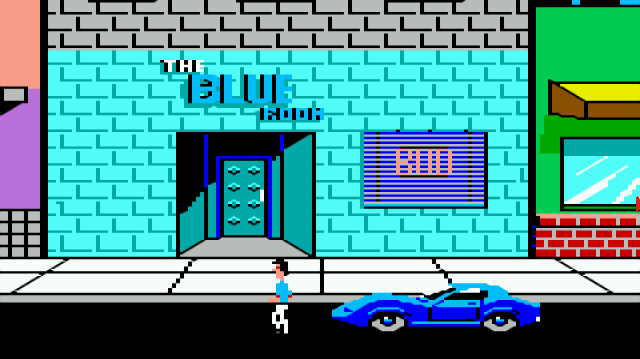 /
/The original Police Quest- 1987
For the fourth iteration of the series, Sierra made the ill-advised decision to court controversy by hiring the disgraced Los Angeles police chief Daryl Gates, who had presided over the Rodney King beating and subsequent riots. Conservative CEO of Sierra Ken Williams, ignoring the repeated pleas of his company's creative team to find a different law enforcement consultant, hired on Gates, who saw the game as an opportunity to "“maybe say something important about law enforcement… [and to] try and give people a better appreciation for what officers face on the job and encourage a willingness to support them.” The two, Williams and Gates, brought a very reactionary worldview to the game, as they both saw Los Angeles as a city under siege by hoodlums and saw Gates as a martyr who had taken the fall. They were both noted conservatives and fans of the Rush Limbaugh talk show. However, the other members of the company were very upset with this decision, Ken William's then business partner Josh Mandel notes: “There were a lot of people at the company that were horribly, horribly unhappy… that Ken and management would capitalize on someone as controversial and dark as Daryl Gates. And Police Quest 4 got [a] different name inside the company. We started calling it Rodney King’s Quest.”
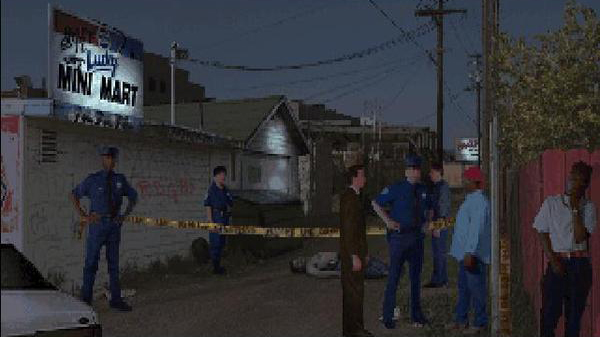
Above is the opening scene of Police Quest: Open Season, which came out in Novemeber 1993 "with Gates’ name in big letters on the box. The player " finds a slain cop and a black child in a dumpster." which ends with you torturing and killing the transgender serial killer"with an improvised blowtorch. He gets a medal for it." The article describes Gates' vision of LA as " a fallen cathedral, where the good and moral and quiet wait in fear of multicultural street scum, creeping over some liminal threshold into white suburban reality. " The game is filled with racist and homophobic undertones: "Gay men and sex workers are lascivious. Black characters say things like “Yo, I be fly today!” and “This be my ‘hood. I be Raymond Jones da third.” with the white police officer protaganist as the "thin blue line" protecting white america from the streets. Overall the Vice critic concludes "It may be a failure of characterization and narrative, but it is a perfect encapsulation of Daryl Gates’ worldview."
Now, this was a game released in the very early days of computer and video games, it was also a complete commercial and critical failure. However, for the 'present" portion of this blog, I'd like to draw attention now to the incredibly popular and ongoing Grand Theft Auto series by Rockstar Games, and this article: Grand Theft Auto and the airbrushing of history

While the Sierra style of text-adventure games is a relic of the past, Grand Theft Auto is a modern, 3D open world game. Rather than typing commands the player has full control over the main character: you can run, jump, shoot, steal and drive cars. Moreover, the game world of Grand Theft Auto is incredibly sophisticated- as you walk around the streets are populated with pedestrians, gang members, prositutes, and the ever present police force, which, if you choose to commit crimes, will hunt the player down with increasing force- small crimes like carjacking will earn you one star, and cause police on foot to subdue you with clubs, while major crimes like mowing down dozens of people in your car and blowing up cop cars will earn you up to five stars- causing SWAT teams, police helicopters, and even the military in tanks to attack the player.

Above is a screen shot of GTA: San Andreas, released in 2004- however the game is set in the 1990s in a fictionalized version of the Los Angeles area (dubbed "Los Santos". The climax of the game involves a riot, just like the Rodney King riots, stemming from the aquittal of a corrupt police officer. However, unlike the Rodney Verdict, this officer is black (voiced by Sammuel L Jackson no less), and unlike the officers who beat Rodney King, he is on trial for dealing drugs and corruption, rather than assaulting a citizen. The author of the above article goes on to take the game to task for "(excluding from its version of the LA riots any examination of historical racial tension."

Essentially, while not as overtly racist and reactionary as "Police Quest", the GTA games offer a worldview that is essentially right-liberatarian, anti authority but also staunchly pro-capitalist: think the show "South Park" for example, the game makes fun of liberals and conservatives in equal measure, and is rife with racial stereotypes. During the "riot" portion of the game, the formerly peaceful pedestrians will now attack you, and the police will direct their attentions on them instead of you, creating a sense of chaos. However, unlike the real racial problems of everyday LA, these riots simply end the moment you kill the corrupt black officer Tennpenny. The author of the above article cites how ignorant the game is of very real social problems in LA that lead to the real riots:" Within just 50 in-game days, CJ amasses a business empire comprising a casino, a record label and a car dealership – in less than two months, he goes from living in federal housing in one of Los Santos’ ghettos to being a multimillionaire. " The message of the game is anti-cop in so far as it is anti-authority, but it is hyper individualistic, masculine, and capitalist. This is similar to the blindness of the previous entry in the series, Vice City, which gleefully ripped off the Al Pachino version of Scarface but without the main character suffering any consequences in the end.

GTA series is alive and well, above: GTA 5, released 2015 on XBOX
Overall, these two games show a trajectory of changing attitudes and worldviews in the medium of video games concerning the LA riots and their social, racial, and political consequences. In the first instance we have a tremendously racist and reactionary early 90s title that was actually co-authored by the top officer of the LAPD at the time of the riots. A decade later we have a much more sophisticated video game that no longer makes the police into heroes but instead champions violent, capitalistic black anti-heroes, yet completely whitewashes the racial component of the LA riots and is still staunchly libertarian and pro-capitalist in its ideology. Overall, video games have maybe moved an inch since the years following the LA uprising, and they still have much further to go. Recent titles such as the independently produced "Undertale" and "Night in the Woods" were profoundly leftist and anti-capitalist, yet were mostly devoid of any possible racial commentary, being populated with anthropomorphic animal characters. Overall video games and their most vocal fans have in the past been largely reactionary and resistant to change, but that may be beginning to change now in the present.

Night in the Woods is really good go play it !
Kiyo Ouchida-Sharif
Getting Over the Past Helps Make a Better Future.
The Rodney King case has shaken Los Angeles for years to come. Faith in the police department was shattered in April 1992 for so many living in Los Angeles, and as time goes on in recent years, the same happens for those living in any city where racially charged police brutality strikes. One might ask themselves, why would so many cops in so many cities would act in such a prejudiced manner? And when looking at racial statistics on crime and imprisonment, one might wonder why it is that so many minorities are arrested and imprisoned, and why it seems that racial minorities are committing a disproportionately large amount of crime in America. In today's society It seems there are no laws that are as blatantly racist towards minorities as have been previously, yet still it seems like minorities are arrested for small crimes more often and receive longer sentences than whites. I interpret that the reason these disproportions exist today is not because of a generally held bias of cops against race because of genetics, but because of culture.
In today's America, the only place you'll find rhetoric that claims that minorities in America are biologically inferior are in groups like the KKK and other backwards-minded groups of people. The more common racist seems not to think that minorities are inferior because of their genetics or by the color of their skin per se, but rather because of that minority's culture in America. This country is filled with cultural groups from all around the world, all mixing and interacting in a country of well over 300 million people. Unfortunately, Real racism, that is, racism based on a belief in genetic superiority of one race over another, has negatively shaped the history for most minorities living in America now, especially those of black, Chinese and native american, and because of that, the culture of those minorities has evolved in a society that has been systematically- until relatively recently- against them, and as such, has evolved to be "against the system." It is perfectly understandable that members of these minority groups which have been historically outright oppressed by the government would develop this way, but its long term effects are the reason cops get more cautious when they enter a mostly black neighborhood, and why some cops like those involved in the Rodney King beating were driven to be racially prejudiced. Racial disproportions in prison systems and crime rates are not due to a government or police department that truly believes that some people are genetically inferior, but rather are due to many minority cultures that have been hurt thruought history lashing out against a system that has largely been disintegrated. Racism in America may be at its all time low, but citizens of all colors are still feeling its negative effects today, and it is that pain that we feel that pushes cops too far. As I interpret it, cops today don't want to discriminate against minorities, and minorities don't want to put their lives at risk going against the law, but the history of our flawed nation has put these two groups on opposite sides of a battlefield, and it's up to every American to rebuild that old battlefield into a placed of unity.
The Legal System That Caused The Riots
One important event that happened during the 1992 L.A. riots was the fact that the video evidence of the Rodney King beating failed to bring the guilty verdict to the police. Despite the fact that the video had visually shown several policemen participating in the physical abuse, the court had determined that the cops were not guilty of excessive use of force. This decision later caused many people to become upset and led to the riots we’ve learned. In the past, the concept of trial by jury was used, so fewer people from the community of where the trial took place played a role in the verdict of the case. However, trial by jury was indeed used in the trial that started the 1992 L.A. riots, which implies that there were many people in the community who believed that the policemen were not guilty. I’ve decided to bring this up so that we may possibly consider potential changes to our current legal system so that a similar event would be less likely to occur. Afterall, our current legal system hasn’t changed much since the Rodney King beating.
We should view the trial of the Rodney King beating as something to reflect upon in terms of our legal system. With how I interpreted the readings of the trial, it seems like the main issue was that the majority of the jury for the trial of the event chose to side with the cops regardless of the video evidence that was presented. The reason for their decision could be from racism, genuine trust in the police, or something else. Although we can’t be certain of their reasoning, the fact that video evidence was disregarded shows that their reasoning was unjust. Since we still use the same jury system today, this issue can occur once again. However, I’m not suggesting that this is something we need get rid of since people in the community should still have some right to decide on such verdicts. We could assume that people in our time right now are more logical and wouldn’t make poor decisions, such as ignoring video evidence, but that isn’t a guarantee. Once again, I’m not trying to argue that our current legal system is in need of some changes. I only wish to bring light to the fact that our system is still similar to the one during the times of the 1992 L.A. riots.
We should view the trial of the Rodney King beating as something to reflect upon in terms of our legal system. With how I interpreted the readings of the trial, it seems like the main issue was that the majority of the jury for the trial of the event chose to side with the cops regardless of the video evidence that was presented. The reason for their decision could be from racism, genuine trust in the police, or something else. Although we can’t be certain of their reasoning, the fact that video evidence was disregarded shows that their reasoning was unjust. Since we still use the same jury system today, this issue can occur once again. However, I’m not suggesting that this is something we need get rid of since people in the community should still have some right to decide on such verdicts. We could assume that people in our time right now are more logical and wouldn’t make poor decisions, such as ignoring video evidence, but that isn’t a guarantee. Once again, I’m not trying to argue that our current legal system is in need of some changes. I only wish to bring light to the fact that our system is still similar to the one during the times of the 1992 L.A. riots.
Saturday, May 12, 2018
Why Koreans took up arms.
https://www.youtube.com/watch?v=OCYT9Hew9ZU&feature=youtu.be
When Korean businesses were being looted during the LA riots many Koreans took up guns. At first this seems like an obvious choice. When you need to defend yourself, you want the best possible option. However, why were many Koreans so confident in using their weapons? And why were the Koreans so desperate to protect their stores, to the point where they would engage in shootouts to defend them? The answer lies in their original country South Korea.
Korea is a country that was often wracked with war and conflict. Often times it was a country fought over by either China or Japan. Despite being a country that was often fought over by other countries, Korea managed to persevere and retain their culture. The most recent war in the Korean peninsula was the Korean war, which took place from 1950 to 1953, around 40 years before the LA riots. As a result of the constant battles, men were drafted into the army for three years (now two) to serve. As a result, many South Korean males were militarily trained in the aftermath of the Korean war. Not only that, but many of the Koreans were as expected poor. Often times when Koreans moved to the United States they often brought everything they had with them. While African-Americans may have viewed Koreans in "cahoots" with the whites, it couldn't be further from the truth. While white Americans may have favored Koreans over African-Americans, Koreans faced discrimination as well, often not being able to get loans. As a result, the Koreans had a close knit community where everyone helps each other. This is shown in the video above where David Joo does not hesitate to protect his boss's store. So when the LA riots occurred many Koreans did not hesitate to grab guns to defend their stores. Not only were they trained in the military, it was probably all they had.
-Kenneth Yang
When Korean businesses were being looted during the LA riots many Koreans took up guns. At first this seems like an obvious choice. When you need to defend yourself, you want the best possible option. However, why were many Koreans so confident in using their weapons? And why were the Koreans so desperate to protect their stores, to the point where they would engage in shootouts to defend them? The answer lies in their original country South Korea.
Korea is a country that was often wracked with war and conflict. Often times it was a country fought over by either China or Japan. Despite being a country that was often fought over by other countries, Korea managed to persevere and retain their culture. The most recent war in the Korean peninsula was the Korean war, which took place from 1950 to 1953, around 40 years before the LA riots. As a result of the constant battles, men were drafted into the army for three years (now two) to serve. As a result, many South Korean males were militarily trained in the aftermath of the Korean war. Not only that, but many of the Koreans were as expected poor. Often times when Koreans moved to the United States they often brought everything they had with them. While African-Americans may have viewed Koreans in "cahoots" with the whites, it couldn't be further from the truth. While white Americans may have favored Koreans over African-Americans, Koreans faced discrimination as well, often not being able to get loans. As a result, the Koreans had a close knit community where everyone helps each other. This is shown in the video above where David Joo does not hesitate to protect his boss's store. So when the LA riots occurred many Koreans did not hesitate to grab guns to defend their stores. Not only were they trained in the military, it was probably all they had.
-Kenneth Yang
Why Does The Man Always Have to Stop Me?
It was a warm summer night in the hood, around 7 pm, on August 11, 1965. Marquette Frye, a 21-year-old man from Watts, was pulled over by the California Highway Patrol on Avalon and 116th under the suspicion of drinking and driving, even though he was just a couple blocks from his home. The officers did a series of sobriety tests on Frye, then concluding that the car needed to be impounded. His mother, then soon many others, joined the commotion. To the Watts resident, this was just, "one racist traffic stop too many." One could easily understand from the situation that the police were using their power to essentially inconvenience the lives those in the ghetto even further, all while building the officers' quota too. If our government (including the police force) continues to institutionalize groups based on race, using unnecessary force and tactics on only those who are from the lower-income neighborhoods who all also happen to be minorities, especially during the epicenter of the Civil Rights Movement in America, the authorities should also be cautious. They should expect the people to react, considering how race issues were being dealt with at the time.
The rough policing of the ghetto's of LA derive from the historical red-lining of communities. While Los Angeles didn't have the blatant segregated facilities like the south (which is where most of LA's African-American population is from), restrictive housing covenants mapped out racial and economic communities. They disabled blacks from living outside of LA's southern basin. Even if an African-American family could afford a nicer home on the West Side, the banks would see the locations and deny the loans. Because of these established communities, wealthier whites at the time wanted to seclude themselves more, as the separations are exemplified when creating these two atmospheres. Police made sure black people stayed in their neighborhoods, and this meant a lot of abuse from police; they would randomly question individuals all the time, asking things like, "Where are you going? Shouldn't you be in your neighborhood? Where are you coming from?" This constant negative interaction makes the people feel like they are criminals when in reality, they are just existing.
Similarly to the riots in 1992, the verdict comes out for Rodney King and the police, and the police are found not guilty, and in response, just like 1965, the people riot, violence and looting ensues, people get injured, arrested, and even killed--all because of ill-feelings with the police. This feeling of the people of these communities in LA stems out generations of mistreatment. Because the Watts riots follow the period of MLK, the government criticized the rioters, stating that their violent upheaval won't solve anything, but only bring destruction, which is also a reoccurring theme in the 1992 riots as well. This perception by the government of the struggle for justice being violent and dysfunctional only further fueled the movement. The people realized that maybe violence can be justified when trying to achieve something; the US government uses violence all the time around the world to get its way, so why is it wrong if black people do the same? Months before the 1992 riots, the same national guard, who was pointing their weapons at the Iraqi's during Operation Desert storm were pointing the same guns at Americans, at Los Angelinos.
-Govinda Tulsiram
CRIPS AND BLOODS Made In America Documentary @14 minutes
Friday, May 11, 2018
Cradle-to-prison Pipeline
https://la1992pastandpresentspring2018.blogspot.com/
https://la1992pastandpresentspring2018.blogspot.com/
Black youth are about four times as likely as their white peers to be incarcerated1. The cradle-to-prison pipeline targets the criminalization of low-income children and children from minority races. The Children’s Defense Fund began the cradle-to-prison pipeline in attempt to dismantle the system that is endanger so many children. CDF began in 1973 with the mission “Leave No Child Behind. Through the cradle-to-prison campaign the CDF has studied the effects of being raised in a “criminalized environment from which the obstacles to escape are formidable”1. CDF focuses on a variety of factors that play a role in determining whether or not children enter the prison pipeline. Some of these factors are limited access to health care, underperforming schools, broken child welfare and juvenile justice systems, and a toxic youth culture that praises pimps and glorifies violence. Once released from prison “criminalized youngsters” go back to the same communities that are ill equipped to rehabilitate these young adults, often creating a cycle.
The cradle-to-prison pipeline arises out of the continuous systemic issues of poverty, criminalization of black bodies, and racism that sparked the violence, looting, and chaos that overtook the city of LA in 1992. Communities of poverty are often racial profiled and criminalized, facing violence from both police and outside forces (i.e. gangs). The stereotype came before the statistics. Society painted men of color as criminals and women of color as ‘welfare queens’, instilling fear in white communities. The police feed into this stereotype as they increased patrol in black communities leading to a higher patrols and higher arrest rates.
sources:
1 https://www.ncbi.nlm.nih.gov/pmc/articles/PMC1955386/
http://www.childrensdefense.org
 |
| A depiction of Michelle Alexander's book, "A New Jim Crow", as well as the cradle-to-prison pipeline. |
-- Mia Buak
sources:
1 https://www.ncbi.nlm.nih.gov/pmc/articles/PMC1955386/
http://www.childrensdefense.org
Thursday, May 10, 2018
How the 1960s' Riots Hurt African-Americans
http://www.nber.org/digest/sep04/w10243.html
Before the death of Martin Luther King Jr. many protests by African Americans were coordinated through non-violent demonstrations of the early Civil Rights Movement. It was this non-violence that began as peaceful and respectable ways for the African American voice to be heard and end segregation. Yet, even through this act of non-violence, the malevolent racist acts and bigotry could not always be avoided by peaceful protest. After the death of Martin Luther King Jr. the carefully orchestrated non-violent demonstrations was overpowered by riots. And it was the riots of the 1960's that brought additional harm to the African American community.
Throughout history there has been significant amounts of race-related civil disturbances and yet it was the 1960's riots that were "unprecedented in their frequency and scope." Vast measures had to be taken to try and end the riots with the most deadly riots being in Detroit, 1967, Los Angeles, 1965, and Newark, 1967. These extreme riots also resulted in numerous arrests and injuries. And as an outcome of the riots later resulted in the significantly negative economic effects on the income and employment of African American's. There was numerous increase of black's living in high-poverty neighborhoods, attending low rank schools, etc. However, these riots were initiated by the racial injustice administered by the government, law enforcement, and the fellow citizens of those who composed said riots. The discrimination, hatred and violence was trying to be shot down by protests as a cry to be heard. Yet it is those who fight for change that ended up being the ones significantly hurt and history still repeats itself today. With the Black Lives Matter movement there are still numerous accounts for racial injustice that lead to riots. Angry people, rightfully so, demanding for change. Even now there is still the economic differences that are simply a result of racism and discrimination. The inequality displayed throughout the country factors into minorities being low in demographics and financially stability. The fights from the 1960's for equality are still being fought today with little to no significant change. Although Dr. Martin Luther King Jr. longed for conflicts to be resolved through non-violence, when violence is being used against that non-violence, there needs to be a louder cry.
-Rebecca Hernandez-Chico
The Los Angeles “Race Riot” and Contemporary U.S Politics, Michael Omi and Howard Winant
In the book The Los Angeles “Race Riot” and Contemporary U.S Politics, Michael Omi and Howard Winant take a close look at the contradictory nature of George W. Bush’s statement following the LA riots in 1992 where he points out that “ ...the system perpetuates failure and hatred and poverty and despair.” This statement is out of character for Bush, who is known for his neoconservative values. In a time of such chaos clearly divided along racial lines, this statement creates a false sense of hope that Bush is finally getting a grip of the structural issues with in the current system that has brought the city of Los Angeles to the state it is during the riot. The message meant to be delivered by this statement, however, is not that poor communities of color in inner cities are economically malnourished through many seemingly progressive measures that only further widen the wealth gap between specific racial and social classes. Bush flips such a simple and seemingly obvious statement to victim blame the poor for failing to fix their own problems and depending on the state for assistance. He indicates the system feeds into poverty because it nurtures a growing culture of poors that are personally irresponsible and feel entitled to be taken care of by the government with no real personal effort to support themselves.
The simplicity and irony in this system speaks to a larger theme at play, the disconnect between the frustrated poor communities of color and the affluent white men put in place to serve these communities. Omi and Howard draw attention to the fact that this issue is persistent across both the left and right American political ideologies, as Bill Clinton similarly implied there needs to be a better demonstration of responsibly from the poor. This leads to the ethical question whether politicians like Bush and Clinton in the ’90s and many more currently are truly blind to the system oppressive roots of America's enormous economy as they comfortably paint the millions of individuals that carry this economy on their back bones as they work tirelessly without reaping any benefit.
-Hanna Abuhay
Wednesday, May 9, 2018
America's Dark Past
Lynchings: America's Dark Past
The video of the beating of Rodney King that surfaced before the 1992 LA riots shocked the world. America, the symbol of democracy, the leader of the free world, according to the vicious beating of unarmed civilian Rodney King, told a completely different narrative. The world's perception of what kind of country America advertised to be shifted dramatically as it recognized that American freedom undoubtedly had its flaws and shortcomings. However, the present image of America, the portrayal of unfair brutality and injustice depicted in the Rodney King video reflected not something new but something traditional, something deeply rooted in American history. In the 21st century it takes on the form of the Charlottesville violence, in the 1990s it took on the form of the Rodney King beating, and before the civil rights movement in an era of blatant racism, it took on the form of lynchings.
The blog post here is to recognize the 1992 LA riots as not an isolated incident, but as a major event along a long timeline of racist violence in America. Specifically, in order to understand that the extreme amount of police brutality shown in the Rodney King video is nothing new, an examination of the acts of physical violence before that event needs to take place. And, undoubtedly, lynchings were the major form of physical violence enacted against African Americans that embodied the very ideas of racism and injustice in America.
According to Time Magazine, during the Jim Crow era, up to 4,000 African Americans were violently lynched. The lynchings were known as "racial terror lynchings" and the victims were often killed under the reasoning that they had committed a social transgression, acts as trivial as bumping into a white woman. Preposterous as it sounds, the perpetrators of the lynchings were never accused for their crimes as the police turned a blind eye. Understanding this dark side of America's history, the Rodney King incident seems to be a continuation of the exact physical violence stemming from racist ideology that existed in the Jim Crow era.
-David Park
-David Park
Today's Rodney King
Watching Rodney King’s beating for the first time in Professor Hong’s class really shook me. Just hearing about what happened and watching as police brutality has not improved scared me alone, but to put a visual to it added an entirely new perspective. Reading Chronology of Rage in class gave me an even deeper understanding of what happened on that night and the events that followed afterward. It’s been twenty-seven years since Rodney King’s beating, and as they say, history repeats itself.
My first exposure to the realities of police brutality was the murder of Trayvon Martin, was twelve. It might seem ironic as I am a young person of color who grew up in Compton, you would have thought I would have already known. I did not really understand at the time that it was a hate crime and that Trayvon was only seventeen. His only crime-- his black skin he wore under a hoodie on his way home. My mom later explained why it happened, and I was still too young to really understand the extent of the situation. As years went on, more names were added to the list one after the other, usually black men, and then black women started to make the list too. Michael Brown shot dead at eighteen after the robbery of a convenience store (NY Times), Eric Garner after selling cigarettes (CNN), Sandra Bland after a traffic stop and taken to a local jail (Chron Texas), and most recently Stephon Clark, shot in his own backyard while on his cell phone (LA Times). All of these people were unarmed victims of police brutality. These are only a few names of hundreds of lives lost to police brutality. Gun crazy cops reach for their holster before their taser or baton even though they have been trained. All of these things sparked protests and organizations like “Black Lives Matter.”
The police sergeant involved in the death of Eric Garner was stripped of her badge after the incident, no jail time served (USA Today). The officer involved in the case of Sandra Bland had his charges dropped and was fired, (CNN) no jail time served, Sandra’s death was ruled to be a suicide (NY Times). Trayvon Martin was killed by George Zimmeman, and still found not guilty, serving no jail time. By these examples, the beating of Rodney King continues to repeat itself when out of control cops use their power to do harm. The officers involved in Rodney King’s beating also did not serve jail time, even with video evidence that we can see today. “Sergeant Stacey C Koon, Officer Laurence M. Powell, Officer Theodore Briseno, and Officer Timothy Wind are found not guilty…” (Chronology of Rage) There was also video evidence in the case of Eric Garner and Stephon Clark, 911 recordings of Trayvon Martin, and surveillance footage of both Trayvon and Michael Brown. Even with solid evidence of what is being done, there is no punishment or consequences served to the men and women who are supposed to protect. You would think even with video evidence presented in court in 1991 when not everyone had camera phones in their back pocket would make a difference in the way the case was treated, but it was not when “an all-white jury” (Chronology of Rage) is to decide the outcome of your trial. Not much has changed between then and now, besides protesting instead of rioting to make our voices heard, but police brutality against black men and women continues.
Cultural Interpretations
"Perhaps the whole root of our trouble, the human trouble, is that we will sacrifice all the beauty of our lives, will imprison ourselves in totems, taboos, crosses, blood sacrifices, steeples, mosques, races, armies, flags, nations, in order to deny the fact of death, which is the only fact we have."
- James Baldwin, "The Fire Next Time."
This passage stuck out to me out of the many great passages in this book due to its relevance throughout human history as the root of negative human actions. This passage states that human trouble starts when humans become lazy and do not want to take responsibility for the uncomfortable sensation of figuring out their own lives, resting instead on narrow minded ideologies that act both as a sort of cushion in the face of the chaos of life and as a machete that clears away anything in life that is unsettling. The passage implies that human troubles and evils result from laziness, fear of the unsettling and unknown, and a sort of denial of forces that reign supreme over humanity, and that a meaningful human life is to be had by taking initiative of ones own life, accepting the responsibility of self actualized freedom, and getting out of ones comfort zone.
The context James Baldwin was writing this was a postwar capitalist America, convinced of its invincibility and everlastingness. This was and still is an America that sacrificed humanity and meaning in life for comfort and stability. This is the America of distraction and illusion. In the book from which this excerpt was taken, Baldwin discusses white America as succumbing to self imprisonment in restrictive ideologies that distract from the harshness of reality, and brings up an interesting point: that blacks in America symbolize that which white America does not want to face, which is the reality of life as hardship and struggle.
Berenger Tan
Subscribe to:
Posts (Atom)