Tuesday, May 15, 2018

Reagan's "War on Drugs"

    There are many United States policies which can be said to have led to the explosion of racial and economic tensions that were the 1992 Los Angeles riots.  American intervention in countries like Korea and Vietnam created new ethnic communities in U.S. cities, while redlining and other domestic policies made life difficult for inner city ethnic minorities. Chief among these policies, however, was the “War on Drugs” declared by President Nixon in 1971. Though it was initially declared and popularized by Nixon, the War on Drugs did not reach its full height until the 1980s, under the Reagan administration. The effect of Reagan’s commitment to the War on Drugs on black communities—especially in Los Angeles—cannot be understated. In 1984, Reagan signed the Sentencing Reform Act as part of the larger Comprehensive Crime Control Act, which abolished federal parole and established the United States Sentencing Commission to increase consistency in federal sentencing. Furthermore, Reagan signed the Anti-Drug Abuse Act in 1986, which created 29 new mandatory minimum sentences for drug offenses, up from 55 mandatory minimum sentences total.    
The policies passed by the Reagan administration had wide reaching consequences throughout the United States, but nowhere could their effects be felt so painfully as in Los Angeles. This was because of the prevalence of crack cocaine in the city’s black communities, and its role in the CIA backed Contra drug trade. Crack was funneled into low income areas in Los Angeles, most often through street gangs like the Crips and Bloods, making the drug almost inescapable for the city’s young black population. Of course, the Reagan’s “War on Drugs” policies made the victims of this drug trade into criminals, creating a system that kept the black population of L.A. poor, addicted, and incarcerated. It was not until 2010, under the Obama administration, that some relief was granted through the Fair Sentencing Act, which alleviated the sentencing disparity between crack and powder cocaine. Even still, the United States has a long ways to go before the injustices of the Reagan administration are righted.
   
- Maxwell Roberts

Institutional Racism

Lucinda Schwarz

In the U.S. prison system, the number of black prisoners heavily out number the white prisoners. This is caused by the economic disparity between different races in our country. White people have an overwhelming advantage over all the other races in regards to being economically stable. Although black people are imprisoned over five times the rates of whites, the trends are getting better. There are actually less black people being incarcerated than white people in recent years. I believe that this is partially due to the growing awareness of racial and social inequity in the U.S. as a result of the influence of media. I think the 1992 LA uprising had a huge impact on society in that people realized that police brutality against minorities is a common reality for the people of color in our country. Before the video of the Rodney King beating, people didn’t want to realize that police brutality was happening because it displays the still apparent racism problem in our country. The broadcasting of the video of the Rodney King beating began an era of media being used to fight against the institutional racism that works against minorities in the U.S.

The 1992 LA Riots were not created solely by the incident of the Rodney King beating, or by the verdict of the police officers. Institutionalized racism has been apparent in our country for as long as it has existed. In the present, not guilty verdicts are still given to white police officers who have racially profiled and killed black civilians for no reason. This institutional racism has persisted even after the uprising, even though it showed the obvious unrest of the people. Our country has created a vicious cycle for minorities by causing a lack of opportunities and then blaming people for not taking charge of their life, rooting back to the concept of “personal responsibility”. The 1992 LA uprising effects the present because it made people realize that the media can be used to our advantage and give the people more power. The uprising also raised awareness about the police brutality against minorities and how bad it truly was.

 References: Hager, Eli. “Analysis | A Mass Incarceration Mystery.” The Washington Post, WP Company, 15 Dec. 2017, www.washingtonpost.com/news/wonk/wp/2017/12/15/a-mass-incarceration-mystery/?noredirect=on&utm_term=.647b1970ba58. Joseph, Peniel. “Why the 1992 L.A. Riots Matter Today.” CNN, Cable News Network, 28 Apr. 2017, www.cnn.com/2017/04/28/opinions/los-angeles-1992-25-years-later-opinion-joseph/index.html.

The Other America

(Note: All quotes were taken from MLK Jr.’s The Other America Speech, except for the very last quote)
            The Civil Rights Movement was one moment of societal unrest, out of many moments, that unearthed the vast array of racial tensions that were rampant in the 1950-60s and are still rampant in the current U.S. Specifically, the major outcomes of the Civil Rights movement laid the foundation for the 1992 LA Riots. By the “major outcomes of the Civil Rights movement,” I mean when the Civil Right Acts of 1964 and the Voting Rights Act of 1965 were cemented into U.S. law. How so? Well, political and societal equality was somewhat gained in terms of everyone being able to vote without any impediments(e.g. literacy tests) and discrimination and segregation were outlawed in public and private properties. But with every step forward, in terms of equality, there is always a step(s) back.
            In a famous and enlightening speech given in March of 1968 by Martin Luther King Jr. titled, The Other America, the idea that equality was achieved and racism was ended with the passage of the civil rights legislation is combatted. In this speech, Martin proclaims that there is still a long way to go for a completely unprejudiced and equal society to be created. Martin states that the civil rights movement, as a whole, was “a struggle for decency” but the new struggle during this speech, during the LA riots, and in present-day U.S. is a struggle for “genuine equality.” By genuine equality, Martin means to describe a society in the U.S.: where there is no impression of a superior/inferior race, where education anywhere in the U.S. is satisfactory, where political and economic opportunities are not based on the color of your skin, “where black men and white men share power together to build a new and a great nation,” and where racism is seen for what it is, unjust. Genuine equality is the idea that the gap of inequality between races can be closed by everyone ignoring preconceived prejudices and coming together to build a better world that is full of more opportunities for all.
            To get back to the point made in the first paragraph, America may have given people of color(PoC) civil rights in the 60s but didn’t give them the resources/opportunities to reverse the last three hundred years of slavery and oppression and to reinvigorate genuine equality. During post-civil rights movement, PoC were still subject to discrimination, lived in poverty, had subpar living conditions and education, and had twice the unemployment rate of whites. (Info summarized from MLK’s speech.) The only thing that changed in their lives was the addition of having a say in political matters and finally being able to legally integrate in social and work areas with whites. In regards to discrimination during this time, the law can outlaw it but the law can not fully stop people from engaging in it.
            Final point, in MLK’s The Other America speech, he disagrees with the riots going on at the time(e.g. Harlem and Watts riots). But at the same time contends that those riots would’ve never happened to the extent that they did if the conditions, examples in previous paragraph, that caused them would’ve been resolved sooner. None of the Harlem or Watts rioters’ voices/demands for equality were heard or listened to. As a result, Martin asserts that the rioters’ were left “unheard” and the only way for their voice, their demands for justice and equality could be heard and listened to is through rioting.
            After more than 50 years has passed, the racial atmosphere of the past still resembles the period of the LA Riots and present-day U.S. This is the reason I chose to talk about MLK’s speech, because his demands and arguments for genuine equality among society similarly echo the same demands and arguments of those who partook in the 1992 LA Riots. The LA rioters were angry at society because after 50 years since the passage of legislation that supposedly gave rights to make all races equal, both races were still not equal at all. One was and still is more privileged than the other by a margin to this day. While PoC suffer the consequences of being given freedom without any readily available resources to lift themselves up in most scopes of their life. 
            Overall, the LA rioters wanted to bridge the gap of racial inequality that never ceased to close since the dawn of slavery. However, people with the power to enact change(e.g. politicians, judges, people in charge of LAPD) barely paid attention to the multiple cases of racial profiling and excessive force done to PoC by the LAPD without ramifications, and the discriminatory loopholes of the legal system that were allowed for inadequate and weak consequences to be given to the officers who beat Rodney King. It was not until they, PoC, took a stand in their struggle for equality that those people began to listen. It was as if their voices, their cries for help and justice were not significant to others before they took action. It was as if they were inferior. History repeats itself and it can be seen that Blacks during the Civil Rights movement felt the same way and pushed against this social stigma to create a better world for future generations of PoC by rallying against the racial inequality in the U.S. Nonetheless, PoC struggled in the 60s, in the LA Riots, and are still struggling today in a society still divided by race. MLK’s speech is just a reminder that the struggle for genuine equality is still an ongoing battle that will always take numerous forms(e.g. LA Riots, Civil Rights Movement) to achieve an America where there is true “liberty and justice for all.”
-Written by Emilio Marquez Fernandez


Monday, May 14, 2018

"Harmless cartoons" are not so harmless

Written by Logan Hickey

At the time of taking this Lit 61R I am taking history of Animation, which has some very interesting crossover between them. Through this blog post I am going to look at the early ages of animation and other mass media and how this affected the public’s perception on race for years to come. The most obvious of this genre of blackface minstrelsy’s heavy use and how it is borrowed in the early animation industry as the first set of country renown icons. This form of entertainment dates back deep into the slave holding roots of the american people, and pulls symbols and caricatures directly from that time period. The characters of Felix the Cat, Mickey Mouse and Bugs Bunny were all based off of the stage performances of the era that came before them, when blackface ruled. The era unadulterated racist animations may have been filtered out going into the late 50s, the symbols that the characters represent of a dark past still stayed, and do today.
These characters affected generations and generations of Americans, even after the animations became loss overt in its connections to live minstrelsy, the amount of grotesque cartoons and the characters that starred in them remained as structures of a once far more obvious link. American’s alive during that time that grew up watching these animations will permanently have a demeaning outlook placed in their subconscious that continues to undermine the African Americans struggle to be taken more serious by the general American Public, when in the streets life is the hardest for their sector.
Hundreds of years of demeaning outlooks on an entire section of people in a country, even when hidden under the surface and with the older generation still have lasting impacts on the generations in the future. The structure of racism stay lie deep within the society of America as a whole. To this extent, African Americans have been attacked by media for the entire 20th century. It is evident that the public’s opinion was effected and had no rally for change going into the 90s, and the way the mass media portrayed them gives some good insight into why the public had not rallied for their aid.


Nicholas Sammond: Birth of an Industry, Duke University Press 2015

Police Violence Report: 2017

Doing some research, I found some interesting articles that discuss and analyze data compiled regarding the topic of police violence rates. I stumbled across a site called policeviolencereport.org that essentially tracks and compiles reports of police violence. The information on the site is compiled from media reports, obituaries, public records, and databases like Fatal Encounters or the Washington Post. I decided to take a look at the violence rates for last year, 2017.

1,147 people were killed by police in 2017--and the site has a compiled graphic with each death labeled. 92% of these were shootings, and other forms of physical violence accounted for the rest. Officers were charged with a crime in only 13 of these cases, 1% of all killings by police. 9 of these 13 cases had video evidence. Most of these videos were captured by police body and dash cameras. Most unarmed people killed by police were people of color. Black people were more likely to be killed by police, more likely to be unarmed and less likely to be threatening someone when killed.

As we saw during our discussions about the beating of Rodney King by the police in 1991, American society, even after the L.A. Riots, still has a problem with police brutality. Police officers are still using inappropriate amounts of force to deal with situations, especially against people of color, and are still disproportionately using violent or lethal force against black people. It is interesting to see, as time has gone on, in relation to how the video of Rodney King's beating was what gained so much publicity for the event, and what sparked legal action, that video footage of police brutality is still being used to actually be able to attempt to charge police officers for misconduct--or at the very least is being used to gain publicity for the issue. Much in comparison to the manner in which Rodney King's case was handled in 1990's, police officers are still receiving very little to no consequences for use of excessive force or for killing people. Considering these infographics are from last year, this is concerning and shows that maybe not as much has changed in our current "post-racial" America as we would like to believe.

As a side note, it is notable that the top city listed as having some of the most preventable deaths due to police violence, is Los Angeles, CA--still in 2017.

-Caitlin Marshall


1965 that connected onto 1992

What happened at the LA Riots in 1992, wasn't a new rising topic. In fact, police brutality and racism has been happening since as early as the Watts Riot in 1965.

Watts Riot was classified as one of the largest urban rebellion of the Civil Rights era. Consisting of million dollars of property damage and over 10,000 National Guards troops were mobilized in South Los Angeles. Thousands were injured and around 4,000 people were arrested in the time span from the initial start of the riot from August 11th to August 17th before the order was restored. All this happened was because of a single man named Marquette Frye, a young African American motorist, was pulled over and arrested by Lee W. Minikus, a white California Highway Patrolman, for suspicion of driving while intoxicated. "Suspicion" with no actual proof. 
This eventually led to onlookers gathering around Frye's arrest and because of the strain of the police and the crowd, a physically exchange started to happen. This event led to large African American neighborhoods, shops, and other to help and restore the rightful order from the government. Which is to improve the social and economic conditions of African Americans living in the Watts neighborhood. But in the end even with thousands injured and some killed after following the riot, the city leaders and state officials failed to implement measures to improve even with reported findings from the gubernatorial commission. 


How has this issue developed a foundation for the 1992 LA Riot? This clearly show how back in 1965, police assumptions and arrest on colored races were still happening and yes; it became even worse as years have passed. Back then it was mainly targeted to only blacks but as time have passed; many more colored race were also targeted like in the LA Riot it was blacks, Mexicans, and Asians but especially the Koreans. Many of these protest and riots started from a simple stereotypical judgement coming from a white police officer. 
I believe that the LA Riot and Watt Riot happened because of certain similar reasons. One was where both of the arrested males were both african american. Both were arrested in suspicion of intoxication on the road inside their car while getting pulled over. One thing different about both the cases is that Rodney King was beaten heavily before getting arrested and his situation was caught on tape, ending up showcasing in his court trial. Frye however was immediately pulled over and was arrested while onlookers gathered around to inspect what was happening. Never-less, colored races were treated unfairly and many stereotypical judgements were always placed as labels for them. White polices arrested both the black males without any sort of proof and "assumed" they were guilty on spot which in the end leads to furious riots trying to win back their justice. These events eventually goes into a cycle of loopholes where many colored races will continue to get accused and arguments happen in order to clarify their innocence which leads to brutal and violent riots.

http://crdl.usg.edu/events/watts_riots/?Welcome

-Qian Mei Guo

Zoot Suit Riots

One thing important to understand about the Zoot Suit riots is the police response to the circumstances surrounding what led up to the riots and the riots themself. The Sleepy Lagoon murder case is widely regarded as the catalyst to the Zoot Suit riots. Twenty two Latino youths were accused of murdering José Díaz with insufficient evidence. During the court case, “evidence” that was brought up included the clothing the accused were currently wearing, pointing out how they all looked like gangmembers. The defendants were not allowed to sit next to their attorneys or consult lawyers during breaks. Seventeen were convicted, although all were later released a few years later, after the Zoot Suit riots. The result of the case made the race relations between the European-American community and the Mexican-American community very tense.

In 1943, an altercation between military personnel on leave and young Mexican Americans wearing zoot suits led to the Zoot Suit riots. Military personnel and civilians marched down the streets assaulting “zoot-suiters”, defacing and destroying their zoot suits, which they saw as a sign of defiance to the war rations. LAPD responded to the riots with orders not to arrest any of the rioters, and some even joined in with the riots. More than 500 Latino civilians were arrested. This racism persisted in the LAPD through decades. This sort of corruption most certainly was not new nor hidden, and is no wonder the 1992 riots were the result of the initial incident with Rodney King and how the courtroom handled his case.

-Herman Wu

When did it start? When does it end?

It is evident that race relations were never really exceptional in Los Angeles, outsiders would not be able to see it explicitly, but if they took a close look, they would be able to look at that tensions between different social groups made it hard for people to live harmoniously. Before the LA riots of 1992 people were already struggling in with the justice system and its enforcers. With the crack epidemic that fell upon the community many people of color were already being targeted, and the police were being brutal. The riots allowed people to come together against the oppressive system, before the video of Rodney King many people outside of the community were oblivious to what was happening. As an outsider myself this history was not mentioned in my academic institution, growing up my community was not the best, however, police brutality was never talked about. Now it is talked about more on many platforms, and it has been brought to light by more people who have experienced it.
The media is a plays a vital role in this situation. Because of the media people all over were able to witness the injustices made by the system. Today we still see the same injustices being done. Officers who’ve harassed and killed people of color have been let off with little to no consequences. People are still being prosecuted by the law for drug crimes and incarcerated unjustly. Jim crow is alive in an implicit form. These riots have not ended, they have transformed into bigger and different movements, such as the Black Lives Matter movement. People are fighting for their rights through distinct forms of activism and in different places of the world. Oppression is also in different forms now, and it targets different social groups as well. Now you don’t need to be an insider to understand or see this because it is shown through the media and corporations as well. The fight for justice does not have a clear beginning, and it is nowhere near done.

-Azucena Nava


Source:
History of South Central, Los Angeles, www.southcentralhistory.com/la-riots.php.

Round 2?


The 1992 Los Angeles riots occurred almost 30 years ago. That means the big issues that surrounded it are no longer of concern to us, right? Wrong. Just because it’s been decades since the riots took place doesn’t mean the central issues of it have been resolved. In fact, it can be argued that the riots have ignited the continuity of past issues.
            The most obvious issue with the riots was racism, which is what ultimately sparked them. The police officers who senselessly beat Rodney King for no reason are the ones responsible for the riots. The policemen were all white, well-off men who decided to beat up a black man without a valid reason. It’s obvious that they held resentment towards African Americans because of the excessive force they used on King. Today, there are still instances of this type of police brutality happening. One well-known incident was with Philando Castile that occurred not too long ago. He was pulled over by a cop and when he reached for his ID, the officer shot him multiple times because he thought Castile was reaching for a gun. Not only was it unnecessary that Castile be shot, but it was also unnecessary that he be pulled over in the first place. He was obeying the laws of the road when the cop decided he needed to be pulled over. Although he was not beat like King, he was wrongfully judged, which led to his death. It’s clear that Castile was being racially profiled by the officer because not only was there no valid reason for him to be pulled over, but he also lost his life when he shouldn’t have.
            Another unwarranted incident that occurred recently was Trayvon Martin’s premature death. Martin was walking home form a store when he was spotted by Zimmerman, the neighborhood watch captain, who called 911 because he believed Martin looked suspicious. After being told not to do anything and wait for authorities, Zimmerman decided to go after Martin, which led to an altercation between the two, and Martin’s death. Zimmerman has not been charged and was let go after he was arrested. Zimmerman never gave a reason as to why he believed Martin was suspicious, leaving us to assume that it was because Martin was black, and Zimmerman isn’t. Zimmerman was also instructed not to pursue Martin, yet he did. Why? This again demonstrates the racial profiling that led to the premature death of yet another African American man.
            It appears that incidents similar to that of King’s still take place today. The Castile and Martin incidents seem to be worse than King’s since they resulted in death. They accurately exemplify Gilmore’s definition of racism: “structured and extralegal production and exploitation of group differentiated vulnerability to premature death.” Because incidents like King’s have not only continued, but have fatal results, does this mean we should be expecting another round of the 1992 riots?
-Julia San Juan

Berman, Mark. “What the Police Officer Who Shot Philando Castile Said about the Shooting.” The Washington Post, WP Company, 21 June 2017, www.washingtonpost.com/news/post nation/wp/2017/06/21/what-the-police-officer-who-shot-philando-castile-said-about-the-shooting/?noredirect=on&utm_term=.673c320452c7.

Blow, Charles M. “The Curious Case of Trayvon Martin.” The New York Times, The New York Times, 17 Mar. 2012, www.nytimes.com/2012/03/17/opinion/blow-the-curious-case-of-trayvon-martin.html.

not the first - wasn't the last


What needs to be taken into account are the circumstances that accompany the 1992 Los Angeles riots. The brutality and hatred shown towards Rodney King, as captured in video, is not a rarity, but instead a commonality. People reacted severely to the event, but, this was not the first time something like this had happened and it most definitely was not the last. This event is NOT a one time scenario, NOT an uncommon occurrence, NOT a freak accident. Violence against minorities, African American and black people in particular, is (and has been) continuously going on. The uproar that came with the beating of Rodney King only proved to provoke and awaken the Los Angeles people, as well as the far greater population that this then 'viral' video managed to reach. The pandemonium that followed the distribution of this video, as well as the fact that the police officers in question of using extremely excessive force were let off practically without even a slap on the wrist, worked in such a way that it made people more aware of the discrimination, racism, and hatred that still festers within our supposedly oh-so-great America.

 This event was not the start of police brutality against minorities; the beating of Rodney King was merely the public displaying of such a horrific situation. Nowadays, with all the technological connections we have around the world, abuse of police power in relation to hurting minorities is far more documented - even though it covers nowhere near all of the occurences that exist. Many motions are forming, such as the #BlackLivesMatter movement which makes an attempt to identify and combat systematic racism. America is not a fair or equal place: it is far from it. The only hope that we can have is the continuation of movements such as #BlackLivesMatter as well as others like it, and the further exposure of our society to these problems. What I hope for you to consider is: who are we if we choose to allow for this behavior to keep on, if we choose to not be a voice that can help stop the unjust and horrific treatment of minorities?

- Anya Lehman

Divisions in races and between races

The riots illuminated a wealth of social inequalities and injustices, but the government and media did a creative job framing the issues so the white public remained ignorant and so the minorities affected believed they were the cause of the problem. In different ways, before the riots and continuing to this day, the government has created divisions between races and in races that prevent/limit meaningful resistance to the system. Former president Ronald Reagan began the era of personal responsibility. He implemented trickle down economics, expecting market force to solve social problems. Former president George Bush continued this era of personal responsibility by encouraging local solutions and advocating private non governmental solutions to social problems(lecture 4-11-18). This attack on the welfare state hit minorities the hardest, particularly individuals did not have familial wealth to provide for them. In light of this, the federal government painted minorities, particularly African Americans, as personal failures for being unable to support themselves. To add insult to injury, during this time there were a large number of Asian immigrants entering the country. The U.S. government didn’t grant these immigrants the same rights as white Americans, but instead used their perceived success against African Americans. Framing Asian immigrants as the “model minority” meant that African Americans’ inability to succeed without the welfare state was due to personal failure and not systematic racism (Kurashige 11). While it was due to systematic racism, pitting Asian immigrants and African Americans against each other meant both groups focused on surviving and hating the other instead of uniting against the racist system that created inequality for both groups. Also starting in the 1970s and onward was the Drug War. In one sentence, the Drug War criminalized drugs that had previously been viewed as a social problem in order to imprison and control minorities, particularly African American men. The government used the Drug War to frame African Americans as criminals and that combined with the era of personal responsibility politics made it shameful to be a criminal. Police targeted African Americans neighborhoods more heavily for drug raids and laws imposed longer harsher sentences for African American drug users. Still, the media and the government portrayed prison as a personal failure of African Americans. This shame and fear of public opinion made prison the worst kept secret in the African American community, given that ¾ of African American men in Washington, D.C. spend some time in prison but no one discusses that fact. Families and friends work hard to hide their loved ones’ prison sentence, while blaming themselves and their loved one for having been locked up (Alexander 164-165). As just the model minority image damaged potential unity between Asian immigrants and African Americans, prison and the government fueled shame around it destroyed the unity of the African Americans who could protest the targeted raids and the highly unfair sentencing laws.

--Diana Rendler.

Authority Sets The Tone for The People

December 7, 1941 is a day that will never be forgotten in U.S. history. The horrific attack on Pearl Harbor in Hawaii not only entered the United States into World War II, but it also started a smaller scale war on American soil. The surprise attack was by the Japanese and only by them which later in turn raised uncertainty in the safety of American soil with Japanese living there. February 19, 1942 was the start of Japanese internment camps where 120,000 Japanese were forced to relocate to ensure the safety of American soil. 


The internment camp went on legally existing for three years and ended in 1945. The lives of all Japanese did not return to its original form as the perspective of them was forever changed after Pearl Harbor. Post camp era was a struggle for the life of a Japanese even when the rules and regulations were changed again for the Japanese. There was still a bit of friction between the Japanese and the United States. The U.S. officials may have removed the rules and regulations for the Japanese, but their terror affiliated identity remained the same to the people in the United States. Most Americans eventually developed a fixed image of the Japanese from all the past events and probably even a chance of fright. This image initially developed from the white house and eventually it was spread throughout the United States to become the societal view of Japanese. The Japanese would continue to live their lives tackling all racially influenced obstacles that came their way. There were many aspects of their lives that were greatly affected by this societal view. The main aspects were the treatment they received, the additional rules that only they needed to follow, and the image of the kind of people they are. It is unfairness when others are able to influence others on the view of another without giving the victims a chance to influence them for themselves. Treatment towards the Japanese was without a doubt influenced by an one's fixed perspective of them. 

There has been a lot of riots and community gatherings for multiple injustice events that has occurred within the United States within the past ten years. In the 1940s, the target racial group was the Japanese. It is now the African-American people here in the United States. The Japanese have lived their lives and organically changed the perspective of the American people's fixed image of them. The African-Americans are now fighting the same battle the Japanese once did here on American soil. In America, it seems that once a racial group makes an impact with their behavior and actions, that is all they are known for. Authority figures would then react a certain way and an image of the group would be forever cemented with them for the time being. 


The African-American community in the United States realized the American perspective of their people when the fatal incident involving Oscar Grant occurred on Jan 1, 2009. A Oakland BART police officer was in the process of arresting Grant and decided to take out his handgun instead of the taser when the arrest turned physical. It was the moment that the American people realized how African-Americans were treated on American soil. Before this event, there were many protests and gatherings for African-American rights and equality. The unequal actions taken then by authority figures were seen again in the early morning arrest of Grant. It appears a fixed perspective of a racial group is truly fixed and unbreakable. After this event, there were many more similar altercations involving authority figures and the African-American group. Each involved immediate force escalation because of the nature of the racial group that pre-existed. It is evident that there is a different treatment towards African-Americans and a fixed perspective of the kind of people they are. It is understood now, that the authority in the United States has the capability of spreading a societal view of racial groups. 


Barry Huang

Gentrifications Creation of a Contemporary Segregated Society West of the 405 Freeway

    In the 1930's and 40's many African Americans moved into towns in the westside of Los Angeles to work in the oil fields located in Marina Del Rey. Sub communities of Venice and Santa Monica such as Oakwood and the Santa Monica Pico Neighborhood were booming with an African American presence. As the construction of the ten freeway led into Santa Monica and the creation of the 405 freeway, which was built in 1964, passed through Los Angeles, it brought with it money and more people looking to change the face of these beachside communities. As for Oakwood, the abolishment of the oil fields made finding work for the people of these communities an endless struggle. As more money and more expensive establishments developed on the westside, the people of these communities were getting pushed out, mostly having to move to communities in South Central and even areas more east of Downtown. Rent prices have skyrocketed since the 50's and 60's which has made it hard for original families established in the westside to continue to living there.
     Currently rent prices have gotten even higher, and with more people renting out their living spaces using Airbnb, it makes areas less communal and more touristy. Rarely any families living in Oakwood and in the Santa Monica Pico Neighborhood in the 50's, 60's, and 70's still live there. Many of my friends that skate at the Venice Skatepark have families that used to live in Venice but now reside in areas like Crenshaw and Inglewood. Other establishments located on strips in Venice, such as Abbot Kinney and properties owned by Google and Snapchat have also led to the gentrification of the Venice community. These implications into the Westside of Los Angeles has further separated communities and has only made living conditions more expensive. The only alternative for many is to move out and to let the yuppies of Silicon Valley take over.

Image result for oil fields venice
Marina Del Rey 1931

Related image
Marina Del Rey Now
                                                                                                                   - Joseph Duerr
Sunday, May 13, 2018

Digital representations of the LA uprising, then and now: how video games have fucked up depicting the LA riots and let racism and capitalism off the hook.

GTA: San Andreas RIOT! (Cheat) - YouTube

Here I'd like to present two articles that deal with the representation of the LA riots in video games, past and (near) present. First, is the notorious Police Quest 4: an old-school early 1990s adventure game by Sierra Online: Police Quest 4: Open Season, one of the most sexist. racist, and transphobic video games ever made, and which had the dubious distinction of being co-authored by disgraced former LA police chief Daryl Gates, who had just been ousted following the beating of Rodney King and the ensuing riots.

From Vice: How Sierra and a Disgraced Cop Made the Most Reactionary Game of the 90s by Duncan Fyfe Jan 18 2018,

The now defunct Sierra-Online made early primitive PC games of the "adventure" genre during the 1980s and early 90s: the types of games with primitive graphics that would have you interact with the world by typing in keyboard commands such as "pick up key", "open door", and "move north". Their flagship series was the medieval "kings quest" and spinoffs such as "space quest" and eventually the gritty "police quest" series, which would have you the player be a police officer tasked with solving crimes.
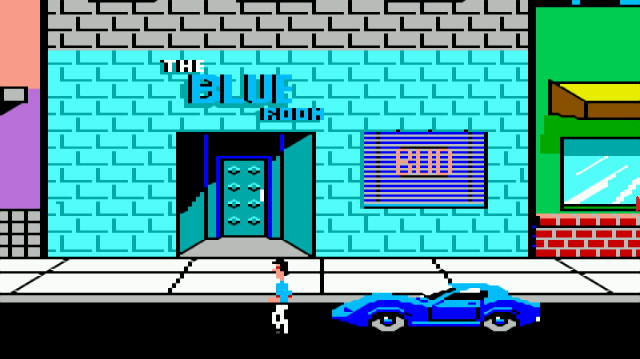
/
The original Police Quest- 1987

For the fourth iteration of the series, Sierra made the ill-advised decision to court controversy by hiring the disgraced Los Angeles police chief Daryl Gates, who had presided over the Rodney King beating and subsequent riots. Conservative CEO of Sierra Ken Williams, ignoring the repeated pleas of his company's creative team to find a different law enforcement consultant, hired on Gates, who saw the game as an opportunity to "“maybe say something important about law enforcement… [and to] try and give people a better appreciation for what officers face on the job and encourage a willingness to support them.” The two, Williams and Gates, brought a very reactionary worldview to the game, as they both saw Los Angeles as a city under siege by hoodlums and saw Gates as a martyr who had taken the fall. They were both noted conservatives and fans of the Rush Limbaugh talk show. However, the other members of the company were very upset with this decision, Ken William's then business partner Josh Mandel notes:  “There were a lot of people at the company that were horribly, horribly unhappy… that Ken and management would capitalize on someone as controversial and dark as Daryl Gates. And Police Quest 4 got [a] different name inside the company. We started calling it Rodney King’s Quest.” 
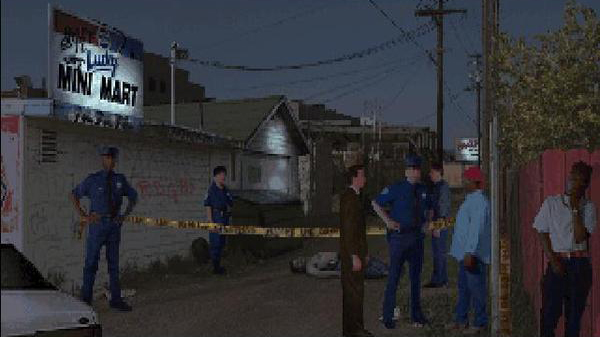

Above is the opening scene of Police Quest: Open Season, which came out in Novemeber 1993 "with Gates’ name in big letters on the box. The player " finds a slain cop and a black child in a dumpster." which ends with you torturing and killing the transgender serial killer"with an improvised blowtorch. He gets a medal for it." The article describes Gates' vision of LA as " a fallen cathedral, where the good and moral and quiet wait in fear of multicultural street scum, creeping over some liminal threshold into white suburban reality. " The game is filled with racist and homophobic undertones: "Gay men and sex workers are lascivious. Black characters say things like “Yo, I be fly today!” and “This be my ‘hood. I be Raymond Jones da third.” with the white police officer protaganist as the "thin blue line" protecting white america from the streets. Overall the Vice critic concludes "It may be a failure of characterization and narrative, but it is a perfect encapsulation of Daryl Gates’ worldview."

Now, this was a game released in the very early days of computer and video games, it was also a complete commercial and critical failure. However, for the 'present" portion of this blog, I'd like to draw attention now to the incredibly popular and ongoing Grand Theft Auto series by Rockstar Games, and this article: Grand Theft Auto and the airbrushing of history


While the Sierra style of text-adventure games is a relic of the past, Grand Theft Auto is a modern, 3D open world game. Rather than typing commands the player has full control over the main character: you can run, jump, shoot, steal and drive cars. Moreover, the game world of Grand Theft Auto is incredibly sophisticated- as you walk around the streets are populated with pedestrians, gang members, prositutes, and the ever present police force, which, if you choose to commit crimes, will hunt the player down with increasing force- small crimes like carjacking will earn you one star, and cause police on foot to subdue you with clubs, while major crimes like mowing down dozens of people in your car and blowing up cop cars will earn you up to five stars- causing SWAT teams, police helicopters, and even the military in tanks to attack the player.


Above is a screen shot of GTA: San Andreas, released in 2004- however the game is set in the 1990s in a fictionalized version of the Los Angeles area (dubbed "Los Santos". The climax of the game involves a riot, just like the Rodney King riots, stemming from the aquittal of a corrupt police officer. However, unlike the Rodney Verdict, this officer is black (voiced by Sammuel L Jackson no less), and unlike the officers who beat Rodney King, he is on trial for dealing drugs and corruption, rather than assaulting a citizen. The author of the above article goes on to take the game to task for  "(excluding from its version of the LA riots any examination of historical racial tension."


Essentially, while not as overtly racist and reactionary as "Police Quest", the GTA games offer a worldview that is essentially right-liberatarian, anti authority but also staunchly pro-capitalist: think the show "South Park" for example, the game makes fun of liberals and conservatives in equal measure, and is rife with racial stereotypes. During the "riot" portion of the game, the formerly peaceful pedestrians will now attack you, and the police will direct their attentions on them instead of you, creating a sense of chaos. However, unlike the real racial problems of everyday LA, these riots simply end the moment you kill the corrupt black officer Tennpenny. The author of the above article cites how ignorant the game is of very real social problems in LA that lead to the real riots:"  Within just 50 in-game days, CJ amasses a business empire comprising a casino, a record label and a car dealership – in less than two months, he goes from living in federal housing in one of Los Santos’ ghettos to being a multimillionaire. " The message of the game is anti-cop in so far as it is anti-authority, but it is hyper individualistic, masculine, and capitalist. This is similar to the blindness of the previous entry in the series, Vice City, which gleefully ripped off the Al Pachino version of Scarface but without the main character suffering any consequences in the end.

Grand Theft Auto v Download full version pc steam activation

GTA series is alive and well, above: GTA 5, released 2015 on XBOX

Overall, these two games show a trajectory of changing attitudes and worldviews in the medium of video games concerning the LA riots and their social, racial, and political consequences. In the first instance we have a tremendously racist and reactionary early 90s title that was actually co-authored by the top officer of the LAPD at the time of the riots. A decade later we have a much more sophisticated video game that no longer makes the police into heroes but instead champions  violent, capitalistic black anti-heroes, yet completely whitewashes the racial component of the LA riots and is still staunchly libertarian and pro-capitalist in its ideology. Overall, video games have maybe moved an inch since the years following the LA uprising, and they still have much further to go. Recent titles such as the independently produced "Undertale" and "Night in the Woods" were profoundly leftist and anti-capitalist, yet were mostly devoid of any possible racial commentary, being populated with anthropomorphic animal characters. Overall video games and their most vocal fans have in the past been largely reactionary and resistant to change, but that may be beginning to change now in the present.
Night In the Woods | The Anarcho-Geek Review

Night in the Woods is really good go play it !

Kiyo Ouchida-Sharif